
Manitoba’s Forgotten Giant: The Common Carp
When we think about Manitoba’s big fish, the species that come to mind are often northern pike, walleye, lake trout, and channel catfish. These are the fish that drive the angling tourism industry, and they often overshadow many other species. However, there is a large fish that rarely shows up in the spotlight and seems to lack prestige among most anglers.
When people think of the carp, they often think of words like invasive, inedible, and destructive. I never placed much value on them either at first, but while trying for new awards with the Manitoba Master Angler Program, I had to learn new techniques for new species. After learning carp techniques, I developed an appreciation for these forgotten giants.
Why You Should Target Carp
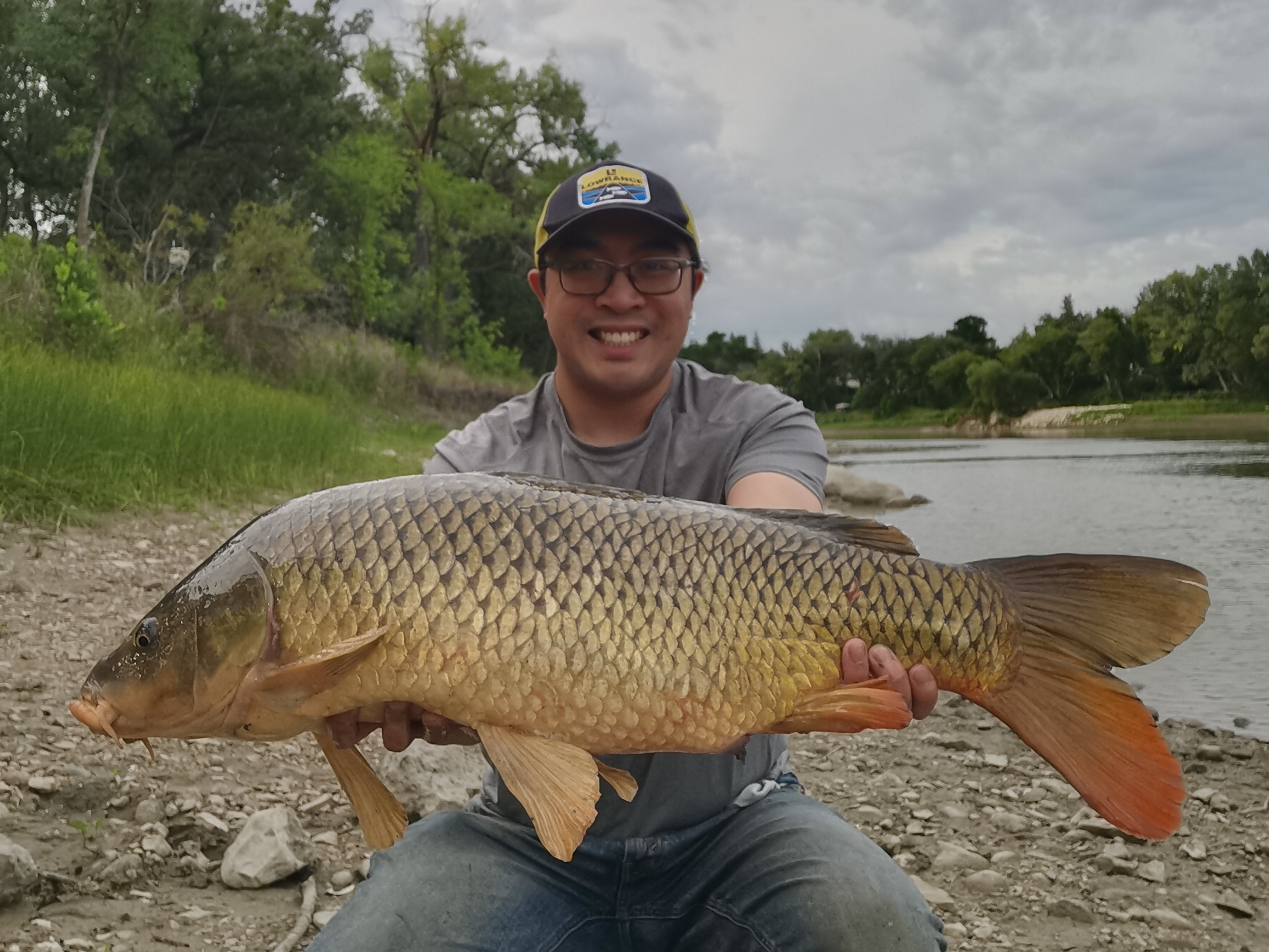
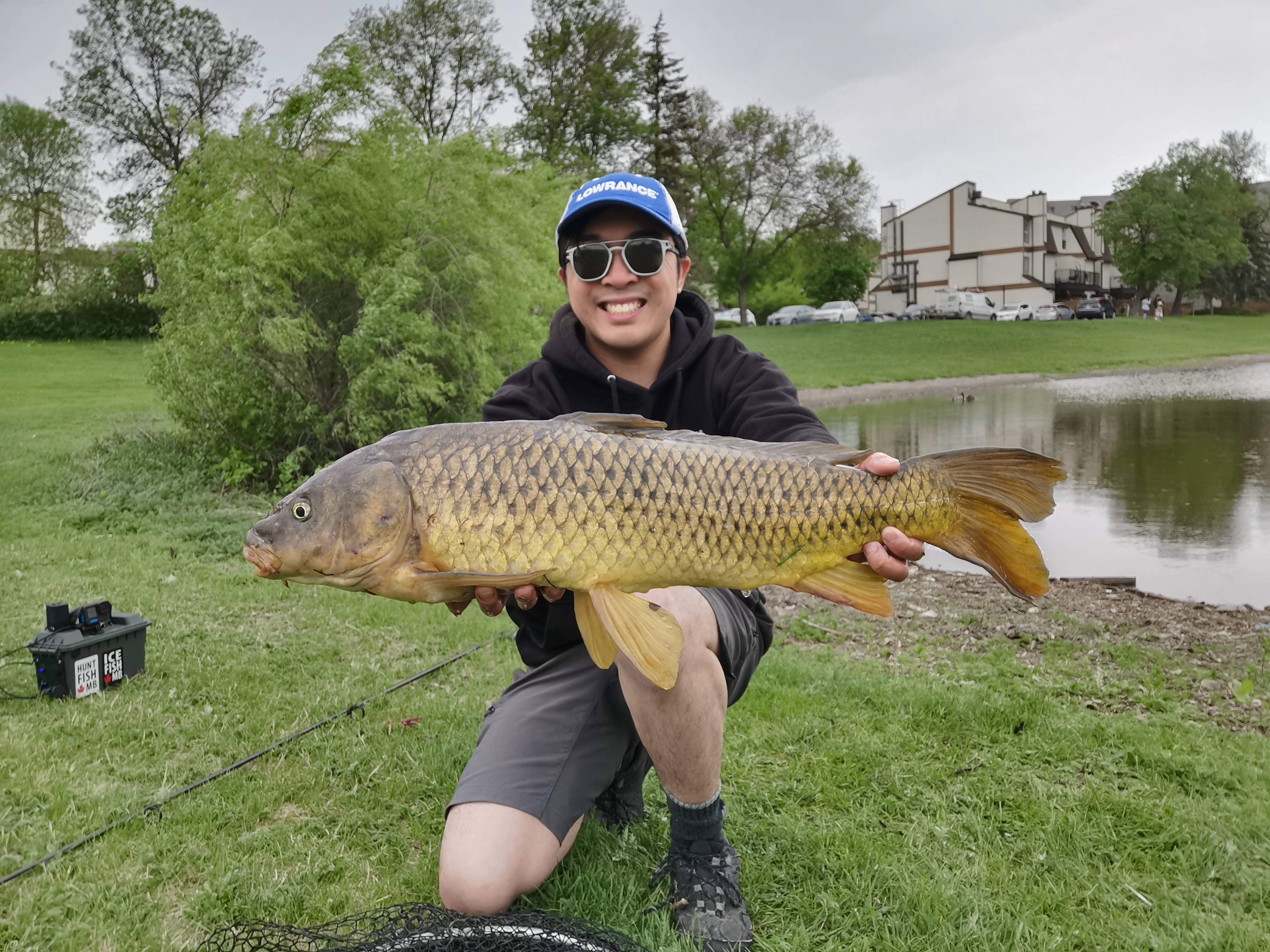
The thing that fascinated me the most about carp was how they could make so many waterbodies their home. From flooded fields to giant lakes, carp can be found throughout southern Manitoba. They might be some of the most accessible fish for the average Manitoban. One of the biggest carp I’ve caught was in a park merely a two-minute drive from my home. I’ve caught them within sight distance of a McDonald’s. It’s definitely a fish that adapts well to urban environments with their tolerance for summer heat and low oxygen. Most carp are caught onshore, and some of the best spots don’t require a boat.
Carp are a great fish to fight, and they are probably some of the hardest pound-for-pound fighting fish in the province. Few fish make fast, explosive runs like a carp, and they take quite a while to wear out, even on heavy tackle. The average carp in many of Manitoba’s waters is quite large, so you are almost guaranteed a great fight every time you hook into one.
While carp, with their vegetarian tendencies, may seem to be difficult to catch compared to other species, the techniques are not that complicated or expensive. It’s probably slightly more technical than catfish. While carp tackle is a bit specialized, the overall expenditure is far lower than popular species like walleye or bass. It’s relatively easy to get into, and we’ll go over how you can catch one later in this post.
Where to Find Carp
As mentioned before, carp can be found in a variety of bodies of water in the southern prairie region. Unlike most fish, they are very opportunistic when finding new places to live. One of my favourite things to do is to walk along city ponds to see if I can spot any carp. In high-water years, carp will make their way up ditches and often get trapped in the middle of a residential neighbourhood. Carp fishing in a city park is cheap and often attracts the attention of a lot of local passersby.
If large carp are what you’re after, larger bodies of water will provide the highest quality fish. Manitoba has no shortage of large bodies of water. Our inland oceans, like Lake Winnipeg and Lake Manitoba, and other vast waters like Lake of the Prairies, have tons of giants. Big rivers like the Red, Assiniboine, and Whitemud have their share of giants as well. The Manitoba Master Angler record book can show you where all the biggest carp can be found.
Finding a spot with carp is not too hard. Chances are you may actually see them in the shallows or splashing on the surface. On big rivers, carp like to escape the current, so look for slack water. The Red River floodway in Lockport is a classic example of a large still-water area adjacent to a fast river. On big lakes like Lake Manitoba, they often concentrate in the marshes in spring for their spawn where hundreds of carp can be seen pushing into the shallows. Don’t be afraid to fish in shallow water; carp can often be found in waist-deep water even in the heat of summer.
The Setup
The Rig
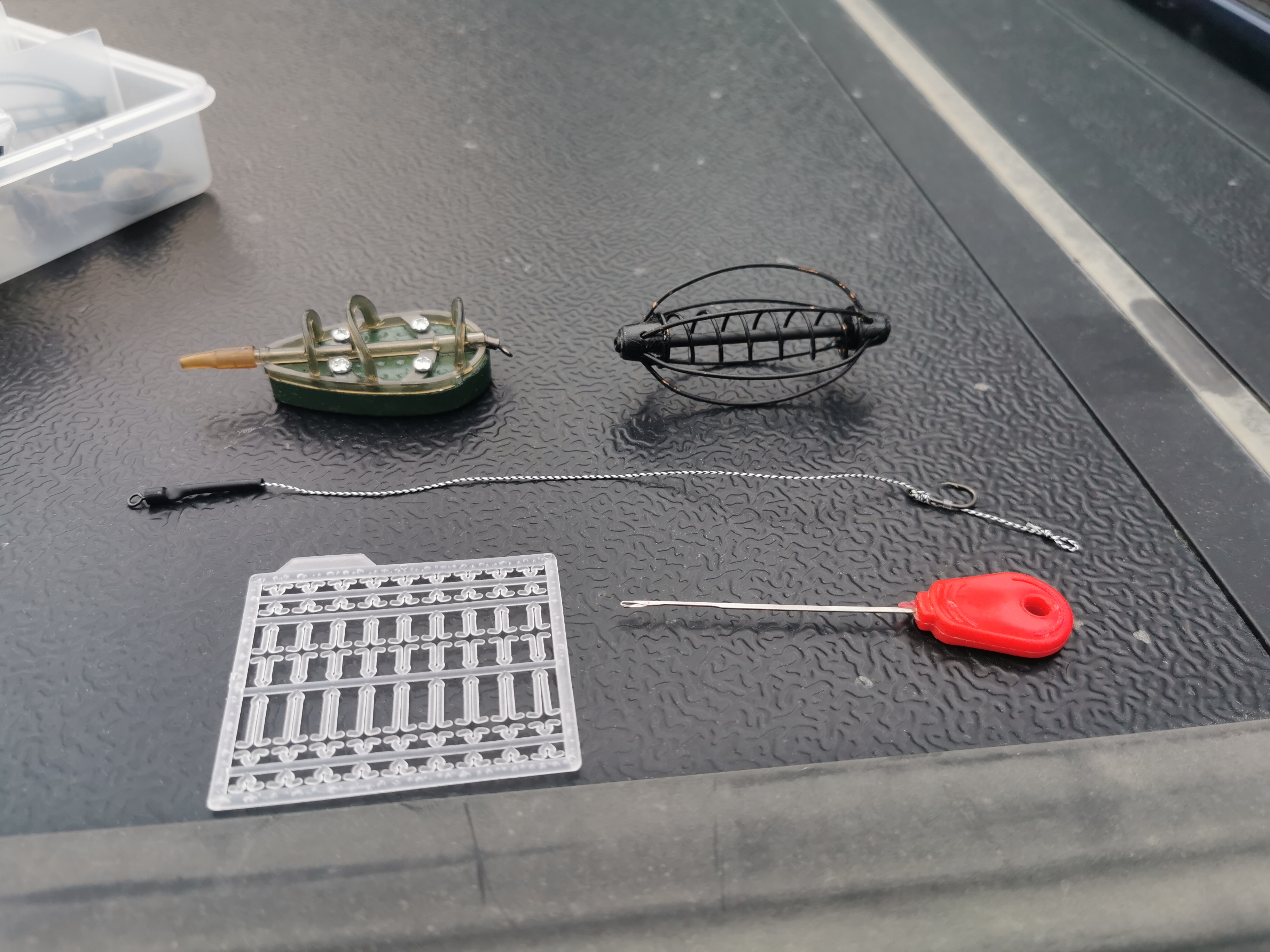
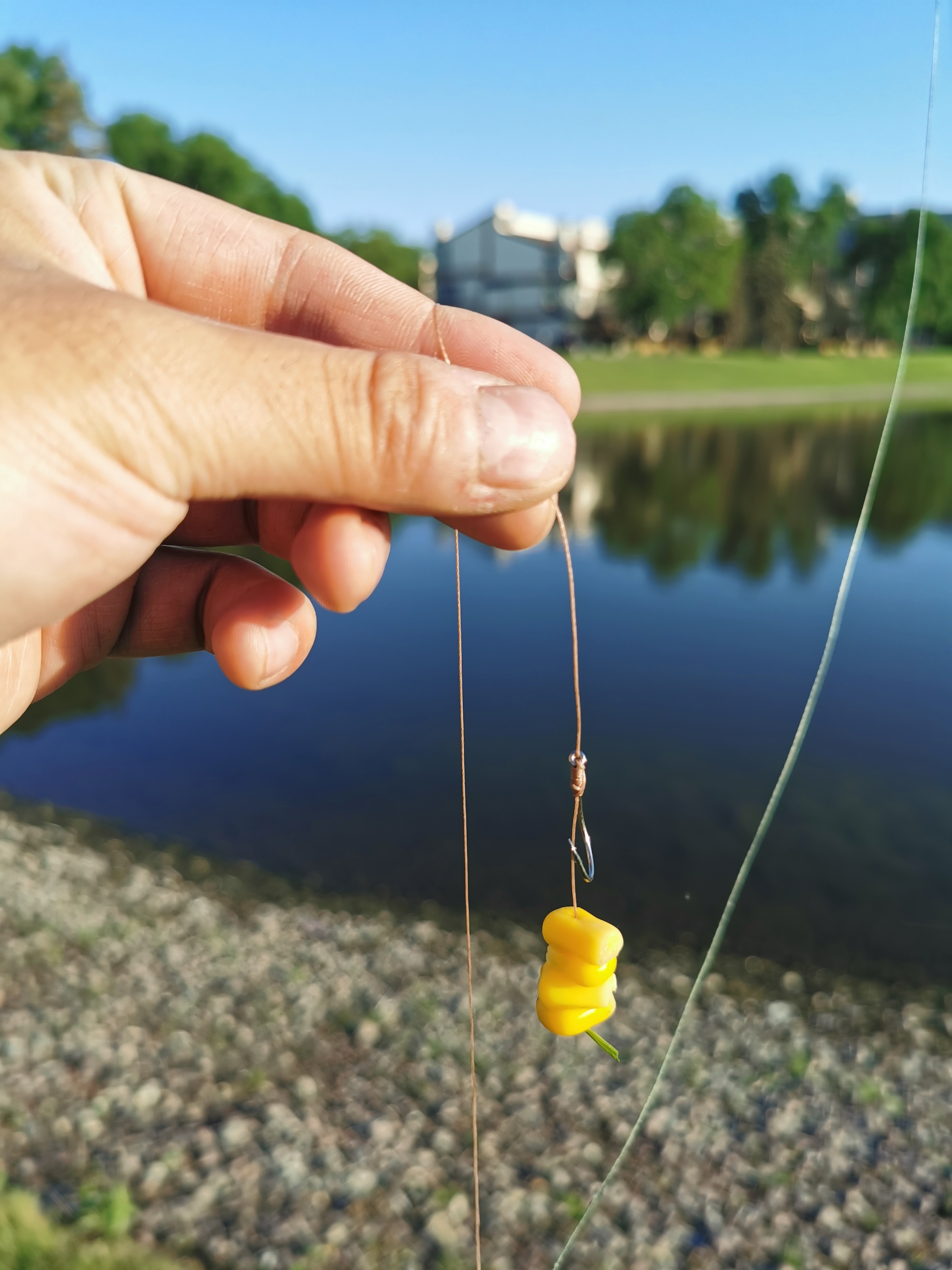
The most widely used rig for carp is the hair rig. It does seem unusual to most anglers, as there is a short section of line that continues past the length of the hook. These can be tied at home with a size 6 hook and braided line or purchased premade. To bait this rig, pierce several kernels of corn onto a baiting needle, hook the loop of the rig with the needle, and slide the kernels onto the line. Insert a stop (like a piece of monofilament line or grass) into the loop. Slide the corn down onto the stop. Remove the needle. The end result should be a hook hanging slightly above the threaded corn.
For the sinker, you want a fixed sinker. You can use a three-way swivel with a heavy sinker tied using weak line in case of a snag. However, the method I’ve been finding success on is to use a method feeder or a cage sinker. This allows for pack bait to be squished onto the sinker. We will go over pack bait in a later section.
This seems like a strange rig with the hook above the bait; however, it’s highly effective at ensuring the fish gets hooked. Carp are actually intelligent fish and can instantly spit out an offering if they feel the hook. The hair rig allows the fish more time to ingest the bait without feeling the hook. By the time the hook is in their mouth, they instantly try to spit it out, but the small fully exposed hook will easily prick the bottom lip. The fish will take off in a panic, and the weight of the fixed sinker will set the hook for you. The baitrunner of the reel is useful here as it allows the reel to easily release line when they make a run (and prevent your rod from ending up in the lake!).
Chumming and Pack Bait
Carp feed using their incredible sense of smell and taste. So find ways to bring the fish to your general area.
Chumming is a commonly used method. Things like corn, oats, and bread can be tossed out in your fishing area to bring carp closer. Some anglers like to prebait an area by chumming before their fishing session, sometimes for several consecutive days.
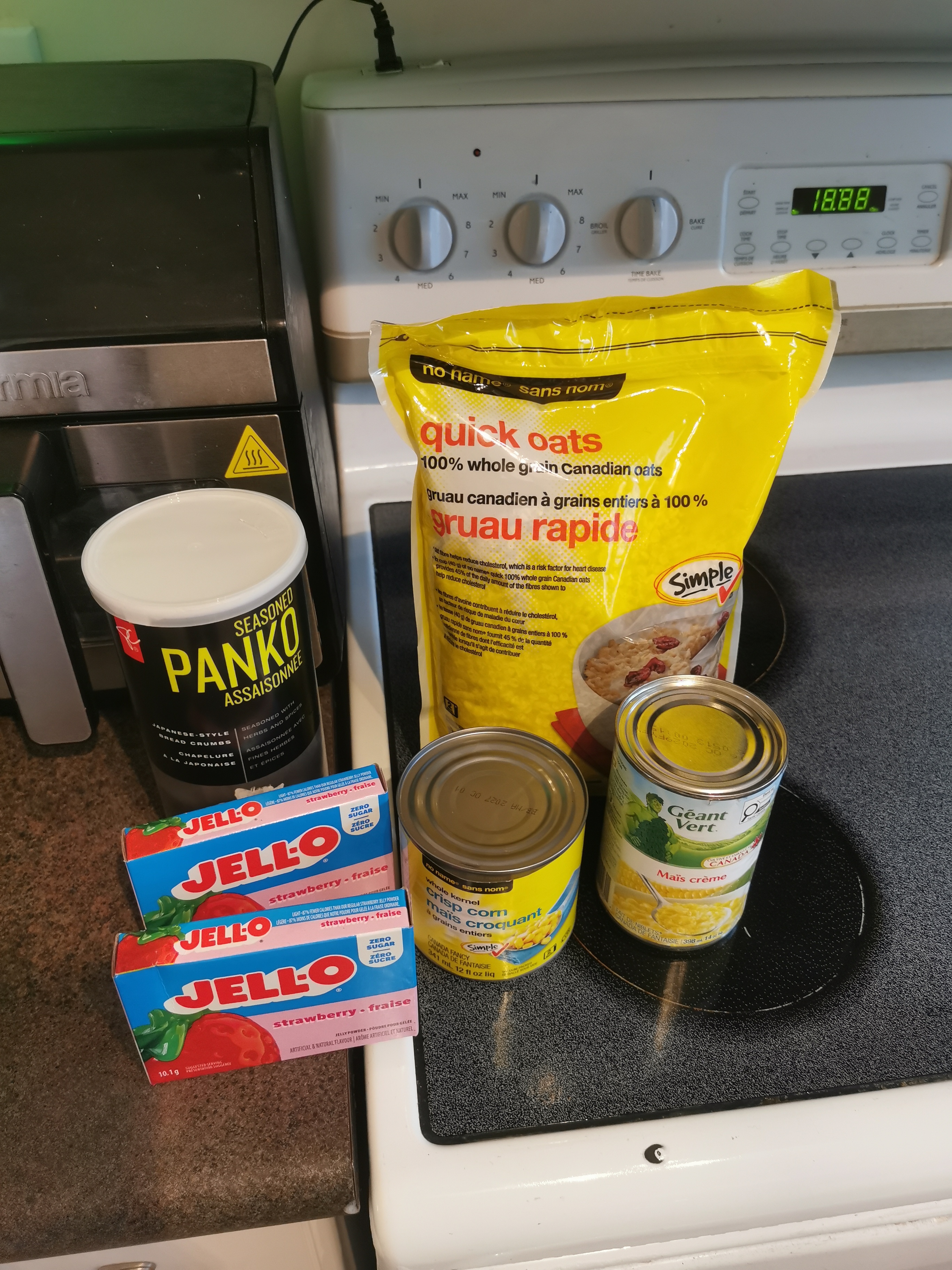
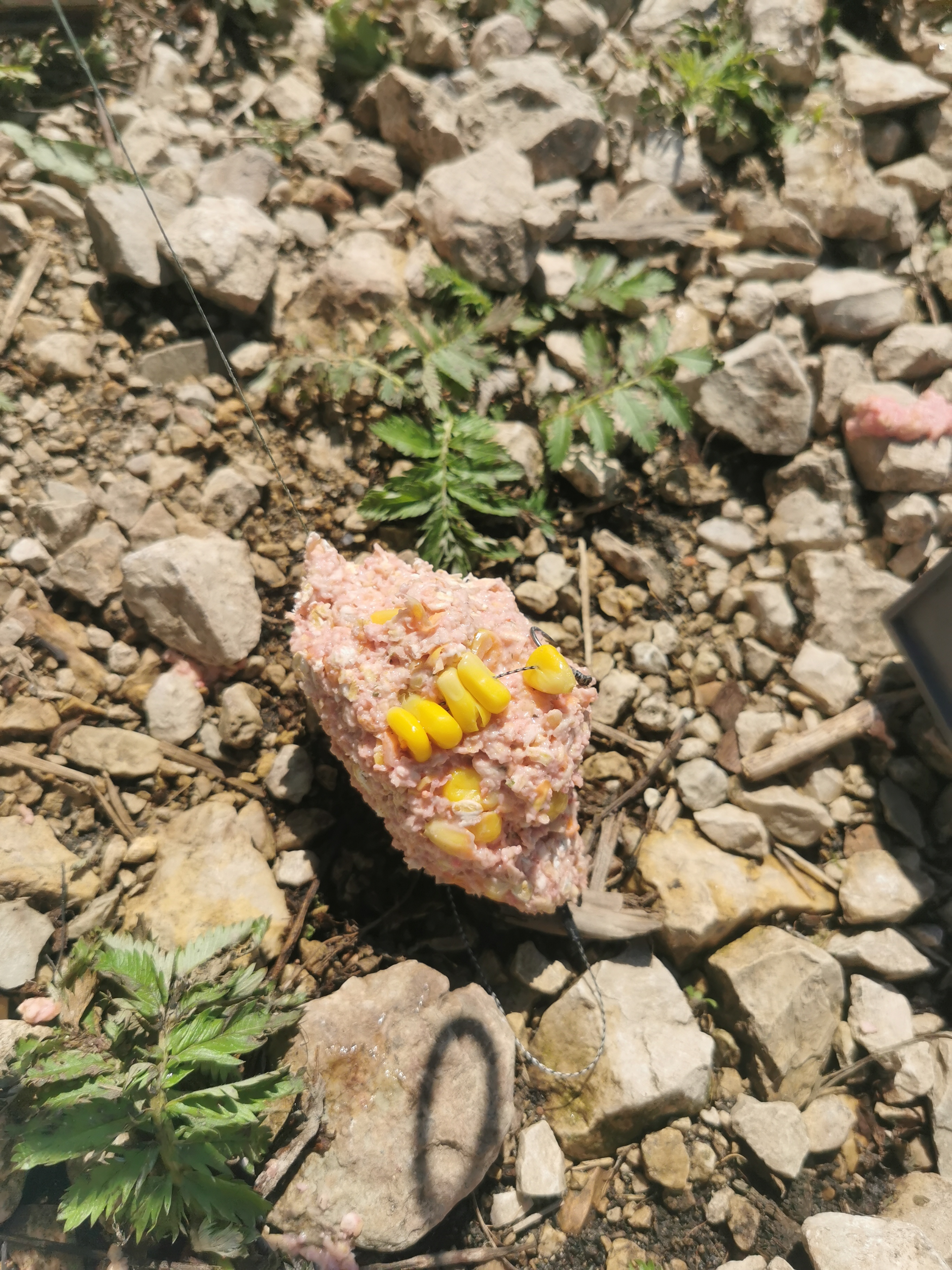
More recently, I’ve been using pack bait with quite a bit of success. Pack bait is a mixture of various scented food items molded on the sinker. There are many methods to do this, but I’ve personally used oatmeal, panko crumbs, Jell-O, and sweet corn. Mix ingredients together in a Ziploc bag or a bucket. Add water and wait at least 15 minutes for the oatmeal to absorb moisture. You should end up with a sticky goop of sweetness that you can squish onto your method feeder or cage. If the mixture is too dry and doesn’t stick, add more water. If the mixture feels too runny, add more oatmeal.
If done correctly, you should be able to pack a chunk onto the sinker and it should stay on during the cast. You can press your hair rig onto the ball so that it stays near the pack bait. When the offering lands in the water, it will break up slowly and release particles of scent that will lead a carp directly to your bait. Reapply pack bait every half an hour or so when it eventually fully dissolves.
The Bite Alarm
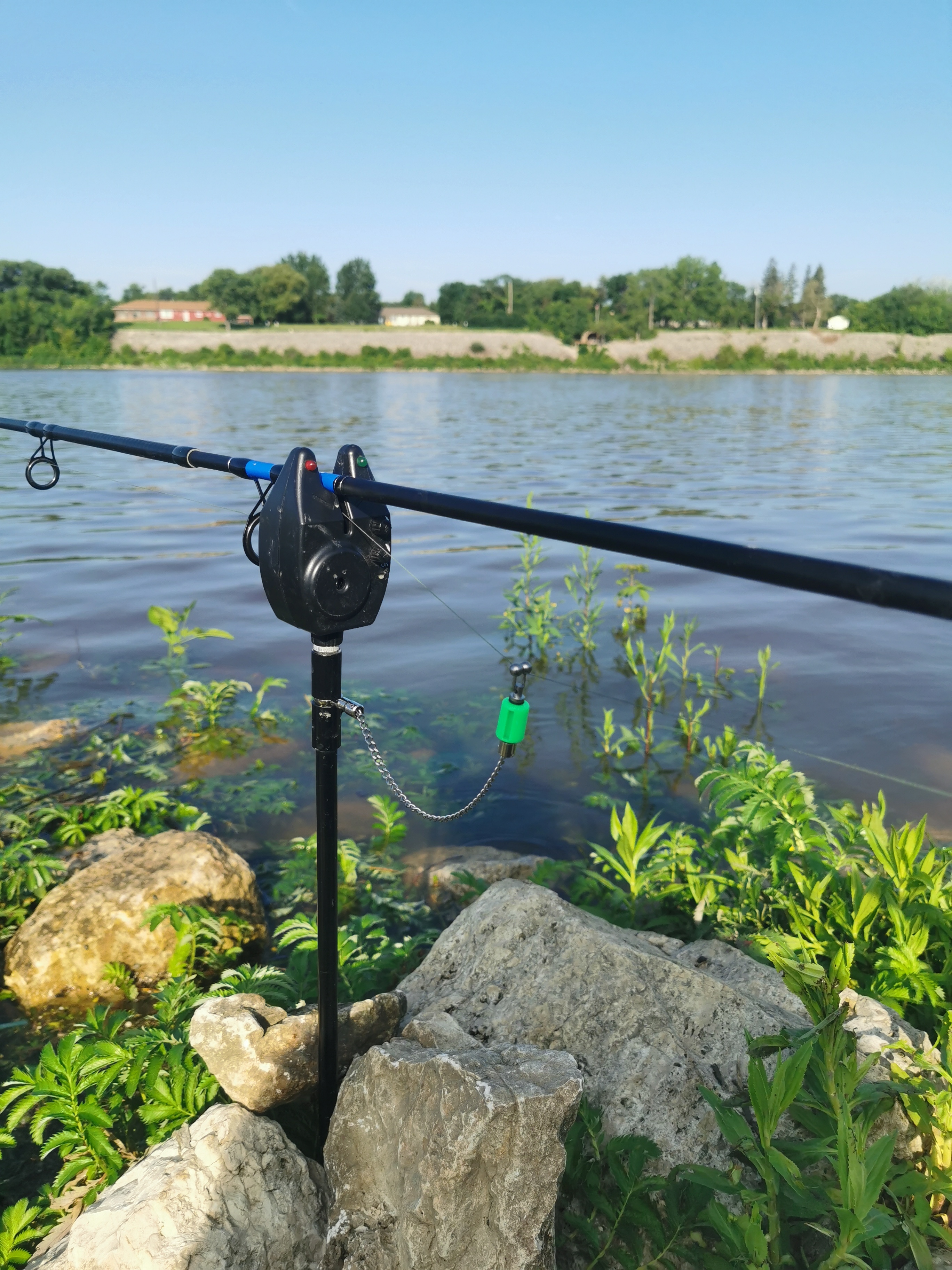
One of the things that made carp fishing fun for me was the use of a bite alarm. A bite alarm is an electronic device that makes a beeping sound when the line runs through the roller. They are fairly cheap online and are typically mounted on a stake. Simply insert the stake into the ground and place your rod on top of it to allow line to run through it. Usually, it starts with a few staggered beeps as the carp is starting to investigate the bait. Once the carp really takes off, the alarm will beep like crazy, and that is the angler’s cue to pick up the rod.
If possible, obtain a fishing bobbin, which is a weight clipped to the line and is tethered to the bite alarm. Clip the bobbin on the line between the bite alarm and the reel after the rod is set down. This is potentially useful as sometimes a carp might swim towards you. The bobbin will then pull the slack through the bite alarm roller, alerting the angler. It’s not completely necessary, but it could help if the angler is distracted or has dozed off.
Always remember to engage the baitrunner, otherwise a carp can instantly pull the rod into the lake. I’ve had a few close calls in the past. If you don’t have a baitrunner, you can just hold the rod constantly or watch it really carefully, but if you do a lot of carp fishing, a baitrunner reel in conjunction with a bite alarm is a good investment.
The Fight and Release
Once the line is peeling out fast, pick up the rod. If you are using the fixed sinker rig, the hook is already set when the carp takes off with the bait. Prepare yourself for an exhilarating fight. Try not to put too much pressure on the carp as the small hook of the hair rig can tear in their soft, rubbery mouth. I try to keep a bit of a loose drag. Take your time and slowly wear down the fish.
When the carp is finally in the net, make sure to provide the best care you can for the fish. They are big and heavy, so unhook them in the water or on a soft surface if you can to prevent them from injury. For more best practices, be sure to review this guide on handling and harvesting. Take a good measurement, making sure to get a clear photo of the measurement alongside a great action shot of you holding the fish, and gently lower them in the water to release them. A Manitoba Master Angler is 30 inches, make sure to submit your catch if it meets the requirement.
If you haven’t done so, give the Common Carp a try on your next shoreline outing. Manitoba’s docile giants are out there waiting to be caught. It’s a lot of fun, and you might be filling out some Manitoba Master Angler submissions in the process.
